


Modern home renovation is no longer just about aesthetics—it’s increasingly guided by scientific research, engineering principles, and technological innovation. From energy efficiency studies to advancements in construction materials, research and development are reshaping how homeowners upgrade their living spaces. Renovating with science in mind not only improves comfort but also increases durability, sustainability, and long-term value.
Why Science Matters in Home Renovation
For decades, builders relied primarily on experience and tradition. Today, research from fields such as architecture, environmental science, and material engineering provides measurable data on what works best. Studies on insulation performance, indoor air quality, and energy consumption allow homeowners to make evidence-based decisions instead of relying on guesswork.
Research-driven renovations focus on three key goals:
-
Improving efficiency and reducing waste
-
Enhancing health and comfort indoors
-
Extending the lifespan of building materials and systems
When these goals are applied during renovation, the results are often more cost-effective over time.
Energy Efficiency Backed by Research
One of the most important areas where science influences renovation is energy efficiency. Research has shown that homes lose significant energy through poorly insulated walls, outdated windows, and inefficient HVAC systems.
Smart renovation ideas supported by scientific studies include:
-
Installing high-performance insulation materials that reduce heat transfer
-
Using double or triple-pane windows designed through thermal research
-
Upgrading to energy-efficient appliances and lighting systems
These improvements are not just theoretical—data consistently shows that energy-efficient homes can significantly reduce utility costs while lowering environmental impact.
Indoor Air Quality and Health
Scientific research has revealed how indoor air quality affects health, productivity, and overall well-being. Renovations that prioritize ventilation and material safety can dramatically improve daily living conditions.
Research-driven upgrades may include:
-
Advanced ventilation systems that circulate fresh air
-
Low-VOC paints and finishes that reduce harmful emissions
-
Air filtration systems that remove dust, allergens, and pollutants
These improvements are especially important in modern homes, where tighter construction methods can trap contaminants if ventilation is not properly designed.
Smarter Materials for Stronger Homes
Material science has led to the development of stronger, lighter, and more durable building materials. These innovations allow renovations to last longer and require less maintenance.
Examples include:
-
Engineered wood products that resist warping and moisture damage
-
Fiber cement siding developed to withstand harsh weather conditions
-
Advanced sealants and coatings designed through chemical research
Using materials that have been tested and improved through research ensures that renovation investments provide long-term benefits.
The Role of Smart Home Technology
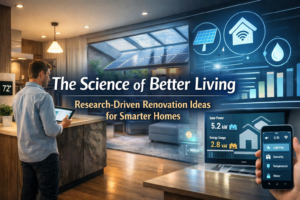
Research and development in electronics and automation have introduced a new category of renovation upgrades: smart home systems. These technologies allow homeowners to monitor and control various aspects of their home in real time.
Popular research-driven smart upgrades include:
-
Smart thermostats that learn usage patterns and optimize energy use
-
Lighting systems that adjust automatically based on occupancy
-
Water leak detection systems that prevent costly damage
These innovations combine engineering, data science, and behavioral research to make homes more efficient and convenient.
Sustainable Renovation Through Scientific Innovation
Sustainability has become a major focus in both construction research and home improvement. Studies on renewable energy, water conservation, and eco-friendly materials have made it easier for homeowners to reduce their environmental footprint.
Sustainable renovation ideas include:
-
Solar energy systems supported by advancements in photovoltaic technology
-
Rainwater collection systems designed using hydrology research
-
Recycled and renewable building materials developed through environmental studies
These upgrades not only protect the environment but can also increase property value and reduce operating costs.
Planning Renovations with Data and Precision
Another benefit of research-driven renovation is the use of data and planning tools. Digital modeling, thermal imaging, and structural analysis allow contractors to predict outcomes before construction begins.
This scientific approach helps:
-
Prevent structural problems
-
Optimize material usage
-
Reduce costly mistakes during renovation
Precision planning ensures that renovations are not only visually appealing but also structurally sound and efficient.
The Future of Research-Driven Homes
The future of home renovation will likely be shaped by emerging technologies such as:
-
Artificial intelligence for energy management
-
Self-healing construction materials
-
Advanced modular building techniques
As research continues, homeowners will have access to more innovative solutions that improve comfort, safety, and sustainability.
Conclusion
The science of better living is transforming how we think about home renovation. By applying research-driven ideas, homeowners can create spaces that are healthier, more efficient, and built to last. Renovation is no longer just about upgrading appearances—it’s about using knowledge, technology, and innovation to build smarter homes for the future.